News
Arts & Sciences
Health & Wellness
Culinary
News
Divine Providence: How Rhode Island’s Food Shapes Our Culture
Rhode Island is well known for its culinary staples, from NY System hot wieners to chowder and clam cakes, coffee milk and everything in between. But beyond the well-known classics is a rich tapestry of food and culture that tells the story of immigration, innovation and shared cultural history.
Johnson & Wales University recently welcomed Yankee Magazine’s Senior Food Editor Amy Traverso and Elyse Major, a lifestyle journalist and editor-in-chief at Hey Rhody Media Co., to the Culinary Arts Museum for a conversation about the foods emblematic to Rhode Island culture both common and lesser known, and how their evolution shapes today’s trends.

Attendees listen to a conversation with Amy Traverso (left) and Elyse Major (right) at JWU's Culinary Arts Museum.
Rhode Island is uniquely positioned to be a culinary hub in the Northeast, Traverso and Major agreed, thanks in part to its size, role in colonial history, and long tradition of welcoming immigrant communities in the late 19th and early 20th centuries.
“There’s a way of celebrating the local foods that just doesn’t happen in other places,” Traverso said. “Providence is proudly parochial, proudly local and focused on where you are.”
Traditional Dishes Turned Local Favorites
Rhode Island is home to many ethnic enclaves born of immigration, bringing specific, unique flavors to cities and towns. Italians brought their recipes for soppresatta, better known in Westerly as “soupy,” while French-Italians made “dynamite” sandwiches a Woonsocket classic. It was, however, the adaptations of these recipes from home that made them so unique to Rhode Island. No culture shaped local flavors more than the Portuguese, said Traverso, weaving its influence into dishes we now consider classics more than any other in the region.
Take coffee milk, the official state drink, likely adapted from the Portuguese tradition of having milky coffee in the morning. It “tells an interesting story about immigration and assimilation,” Traverso said. Stuffed quahogs are not complete without Portuguese sausage, Major added.
 Elyse Major, lifestyle journalist and editor-in-chief at Hey Rhody Media Co.
A Hub of Development
Providence continues to be a singular food destination in New England, built from this strong cultural history and fueled by an appetite for new and exciting culinary offerings.
“We’re so proud to be the smallest state,” Major said. “We’re small, so that keeps us nimble, and kind of scrappy, and I feel that throughout the state. There are so many things that blow up here. I’m just always fascinated by those things. What causes a line around the block all of the sudden for something that seems so simple?”
The state offers ample opportunities for fledgling businesses to try out new and exciting things, as well.
“There’s so many, and I don’t know how you keep up,” said Traverso. “Could any city be better positioned for a better restaurant culture? You have an incubator of talent, you have access to amazing ingredients, you have strong passion and such a strong local identity. Compared to New York City or Boston, it’s still relatively affordable to open a restaurant, so you can afford to take a risk and experiment.”
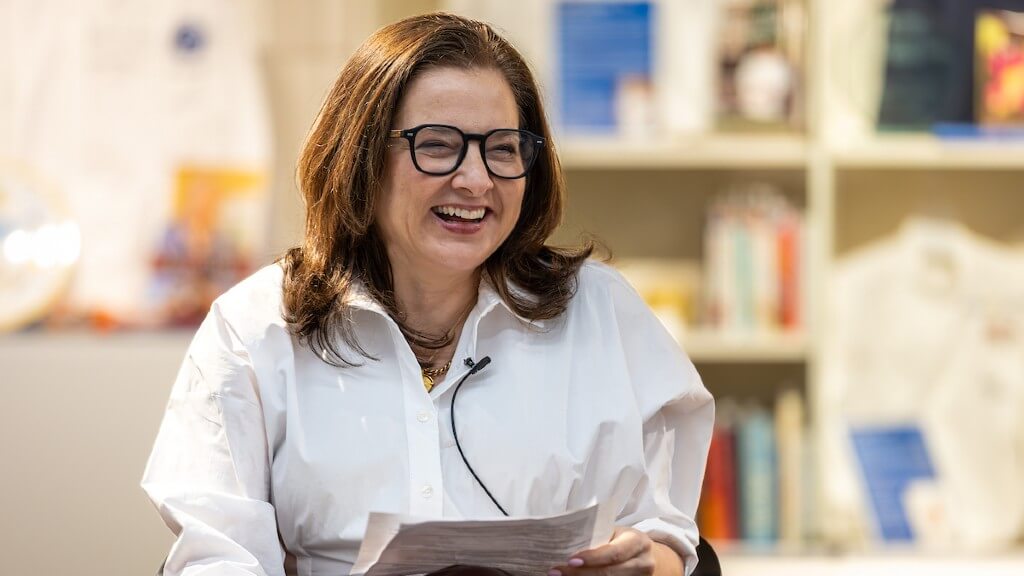
Amy Traverso, senior food editor at Yankee Magazine
At the end of the day, it is the nostalgia for the foods associated with family and culture that helps make it such a special part of Rhode Island culture.
“When food is a major part of a place’s identity, people can find common ground with each other,” said Traverso. “We really resonate with each other’s cultures, and it becomes additive.”
Related Posts

Culinary
Alumni
Hospitality & Business
How 3 JWU Alumni Helped Run FIFA World Cup 2026
Students
News
Visiting Campus? Plan a Perfect R.I. Weekend
Culinary
Students