Culinary
Alumni
Hospitality & Business
Culinary
Alumni
Culinary Alumni Leaders Share Their Career Journeys
When you're starting out in the culinary field, every decision seems momentous. What career choices will set you up for success? Where should you do an internship? Is fine dining the right place for you?
Each year, JWU’s College of Food Innovation & Technology brings alumni leaders with a broad range of expertise to campus to answer these questions through the lens of their own experiences — the highs, the lows, the lessons learned — and to help culinary students learn to trust their own gut instincts.
This year’s six alumni panelists included a Season 24 Hell’s Kitchen cheftestant, a fine-dining executive chef, two community nutrition leaders, a food business connector and a zero-waste pastry innovator. Master Instructor Ray McCue '01, '11 M.Ed., CEC, AAC, CHE, moderated and encouraged students to share their own questions.
The panelists:
- Rochelle Cooper ’12, Pastry Chef, The Duck & The Peach
- Kayla N. Gaston-Singletary ’22, Executive Director, Flik Independent School Dining
- Corey B. Silverstein ’09, Senior Director of Experience (Northeast Region), FOODWORKS
- Benjamin G. Wald ’19, Executive Chef, Café Monarch & Reserve
- Flannery Sullivan Whatley ’19, Community Nutrition Manager, Rhode Island Community Food Bank
- Antonio A. Wormley ’12, Executive Chef, Little Clam
What drew you to JWU?
Wald: I loved the opportunity to go to culinary school and have a real-life college experience. The ability to network with other like-minded individuals both in culinary and in other majors was a great part of my college experience.
Gaston-Singletary: I actually visited the Culinary Institute of America and it felt a bit militant — I’m just not that type of person. JWU felt like a place that would give me more of the college experience. I loved all the kitchens. I was like, “Wow, this is so glamorous!”
Silverstein: JWU really gave you that avenue of pursuing both front of house and back of house experience, which I feel has been really helpful in my career.
What piece of advice would you give yourself when you were just starting out?
Cooper: Really think about getting boots on the ground in the kitchen early and often. I also did internships. The three I did while I was in school were very different: One was a resort, one was a hotel and one was at a fine dining French restaurant in a city. It exposed me to the different aspects of the industry so I could better refine what direction I wanted to pursue when I graduated.
Whatley: To echo that: Take advantage of all of those internship networking opportunities that you get in school because it’s much harder to network once you’re outside of this environment. You really have to create those opportunities for yourself.
Silverstein: If I could have told myself something at 22, I would have said, “Be patient.” This is not a sprint; it’s a marathon. Just take it one step at a time; there are going to be things that throw you off course. The biggest thing you can learn is resiliency. Because when things don’t go according to plan, how you react to it is truly going to build you up.
“Doing an internship exposed me to the different aspects of the industry so I could better refine what direction I wanted to pursue when I graduated.”
How important is mentorship?
Gaston-Singletary: I don’t think I would have the title of executive chef now without having my mentor.
I work under a regional corporate chef. Whenever I have questions about menu development, issues with my team, issues with my staff, client issues, I go to him for that support. I just had my monthly call with him yesterday to update him on all the things that are going on in my kitchen. No dishwasher, no dinner cook, no sous chef, but you know what? He sent someone there to lend support for the day.
Mentorship is really important. When they see you working hard, they give you the opportunities. [My mentor] calls me when there’s events at other schools because he knows I’m going to be there to support. He sees my hard work and that’s exactly why I’ve been able to work up the ladder a bit faster than others. Mentors get you to the places you don’t think you can get to!
Wald: Everyone wants to say, “Oh, I work for someone.” But ultimately what’s really important is working with someone. I try to harbor a staff where everyone wants to work together as a unit, rather than individuals and individual stations.
View this post on Instagram
How has the industry changed since Covid?
Wormley: We all know that AI has taken over. A lot of quick service restaurants are moving to this technology where you just go up to a monitor, you put in your [order] and someone makes your food. So you don’t get that instant interaction with a guest that you normally do going into establishment.
Silverstein: Obviously there have been major advances in how digital food arrives to you and the pandemic kind of hyper-accelerated that. I do agree that AI’s coming, so let’s utilize AI to optimize what we’re doing. My theory is, down the road when there’s restaurants where robots are cooking, people are going to go there. But we’re always going to be able to deliver a different experience with human touch through hospitality. We need to go to our roots and embrace that.
What are you looking for when somebody comes to work for you?
Wormley: I look for personality and availability. You want to have people on your team that believe in your vision. And the only way your vision is ever going to happen is if everyone buys into the team. So “One team, one dream” is huge for me.
Silverstein: For me, it’s a combination of personal people skills. Are you open-minded? Can you listen? Do you want to collaborate? Are you a team player? Do you show up on time? Do you take pride in what you do? And I think the biggest thing everyone in this room should really embrace is our food, what we do. It’s all about paying attention to the details. And if you master those details, you can apply the craft to anything.
What is something what distinguishes one candidate over another for the same exact role?
Cooper: A big thing for me is follow-up and follow-through, especially when you’re applying for internships or jobs. Chefs are literally running around swatting problems like whack-a-mole — the dishwasher broke, that person called out — and they might miss your email. So don’t be shy about following up a week later if you haven’t heard from them, maybe you just need to get back to the top of their inbox.
Can one of you share one of your best hiring decisions over the past 10 years or so?
Whatley: One of my most recent hires had a background in community work but no formal culinary background and was nervous with public speaking. A lot of what I do is community education and it was almost a gamble, but what I really liked about this person was the way that they could connect. You can teach someone how to make and follow a recipe, but you can’t teach what this person brought to the team, which was being able to go into a room of strangers and make them all feel like a family. So with a lot of coaching, they’ve become the strongest member of my team. They have learned how to cook; they can do a cooking demo in front of people. You can’t teach someone how to connect with other people, and that was what they brought to the table.
“Creativity’s like a sport. The more you play a sport, the better you get. So don’t be scared of trying out new things, trying out new flavors.”
When you have a tough or repetitive task ahead of you, how do you stay motivated?
Cooper: You have to reframe your mindset. I had a trick that I started at my first real job out of school because we were short-staffed and I found myself having to do a lot of big, daunting tasks, like making a gazillion biscuits or cutting apples for apple pie. And instead of putting on my list, “Cut a case of apples,” I’d write, “Apple party!” And it kind of gave me a little bit of oomph. I would tell people and sometimes they wanted to join my party! And you can race yourself; you can race your partner — that’s a great way to get faster at things.
Where do you find menu inspiration?
Wald: Everybody wants to be creative and I think people are scared sometimes to be creative. And I think creativity’s like a sport. The more you play a sport, the better you get. So don’t be scared of trying out new things, trying out new flavors. And the more you keep working at it, the easier it will come to you. I’m in the middle of the desert trying to put together tasting menus that stand up against these restaurants in New York and California. I work closely with purveyors, and I base my menu and my creativity off what I can get. Then I’ll work my creativity around that one item and build menus that are cohesive, starting with lighter flavors down to heavier flavors at the end.
How does sustainability play a role in your operations?
Cooper: Good question. During the pandemic times, we had to stop indoor dining, and we had a café that stopped, too. We were sitting on a bunch of milk and I had all this dessert mise en place and nothing to do with it. So I started an ice cream pop-up and I turned all my stuff into like fun ice cream flavors, Ben and Jerry’s style.
I still do it because it’s a great way to use up my extra mise en place when I have a menu change. Brunch is only two days a week, right? Why not take those cinnamon rolls and turn them into ice cream and a plate of dessert for dinner? And I’m making good money off my ice cream. So it’s a sustainability and profitability effort, which is really important in our industry.
Discuss the role of risk-taking in a culinary career.
Wald: Risk is kind of fun to play with when you’re young because the stakes are much lower. I finished my bachelor’s degree here at JWU and treated my first job out of school like it was my graduate degree. I went and found the best restaurant I could possibly get into, to get my foot in the door.
Wormley: I would say travel — get out there. Don’t get complacent and stuck in one spot. There’s so much more out there and so much opportunity just traveling. Once you get to the point where there’s no more growth in your position, sometimes taking a lesser position to be somewhere new, to learn to grow, is a good thing to do. Traveling really opens your eyes beyond food, and to be able to grow as an individual is so important.
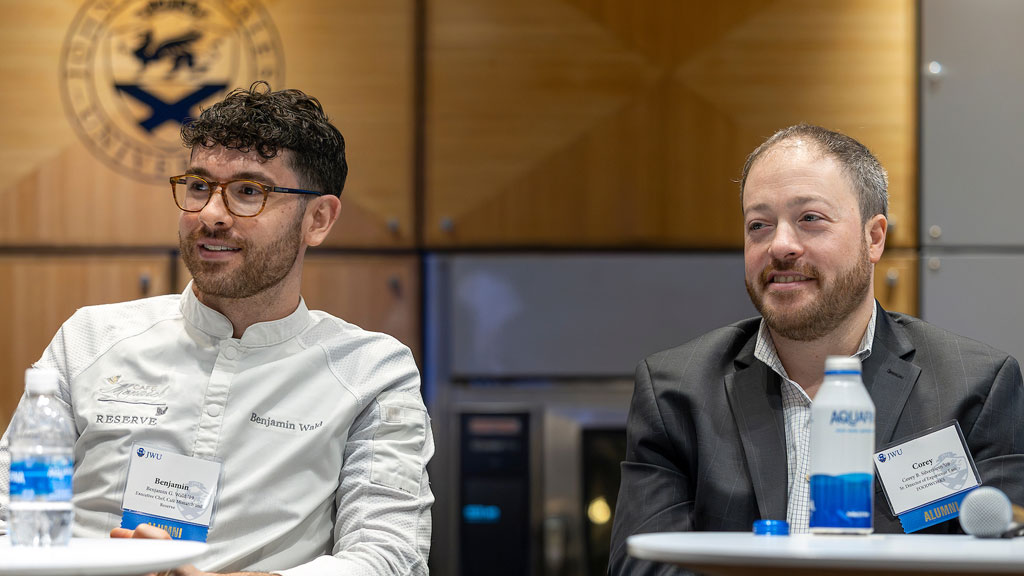
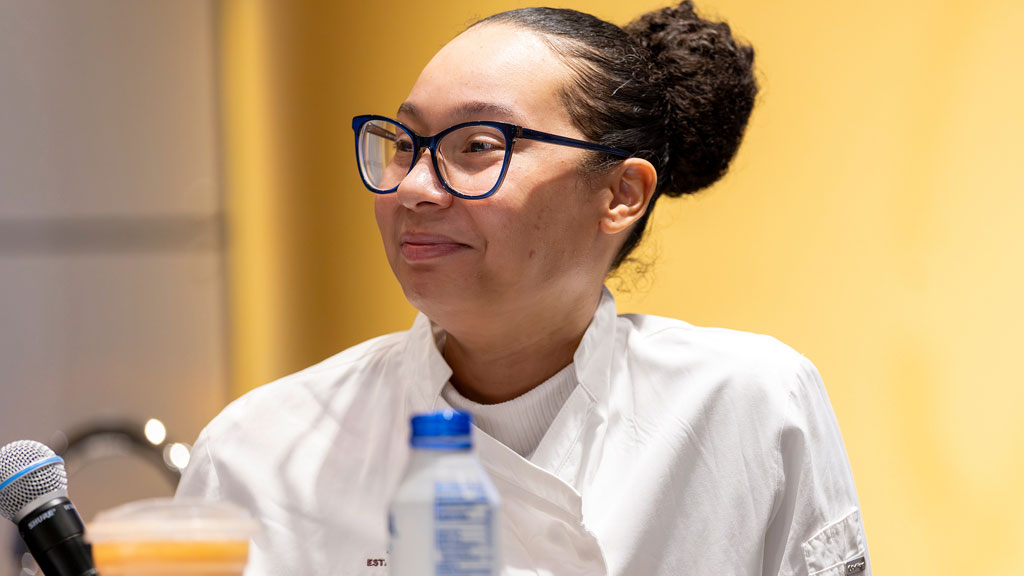
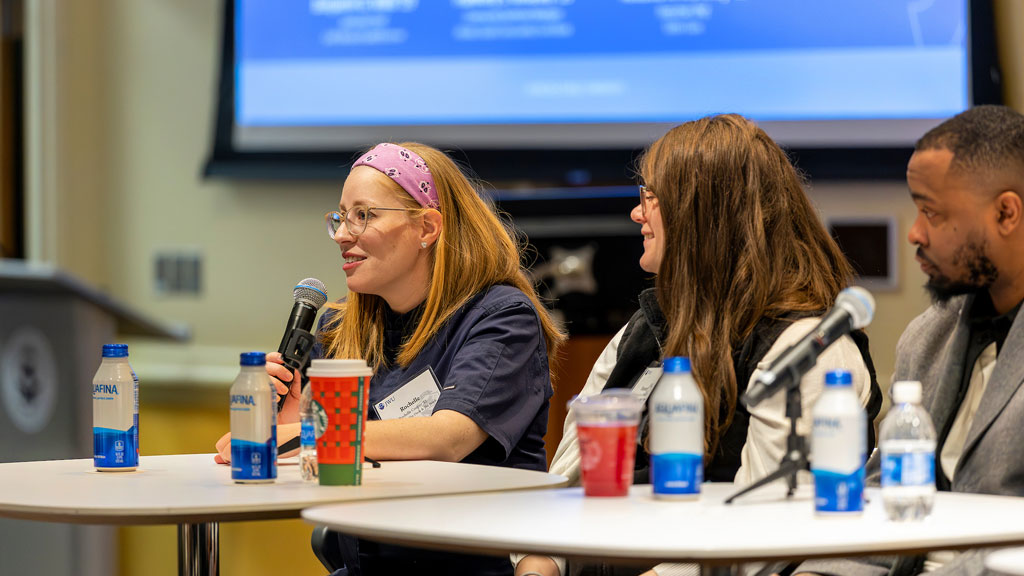
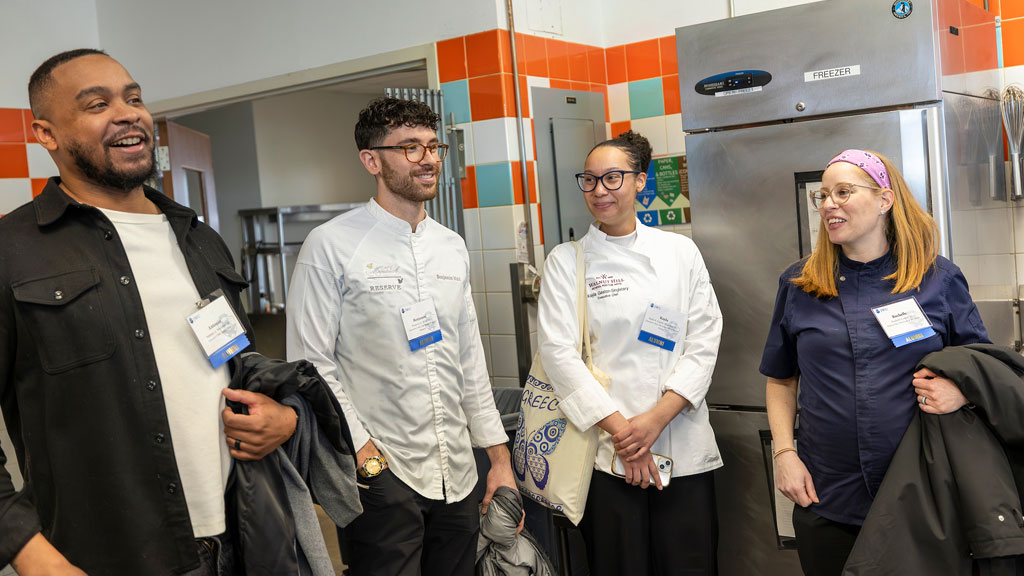
Top: CFIT Alumni Leaders panel with Rochelle Cooper '12, Flannery Sullivan Whatley '19, Antonio A. Wormley '12, Ben Wald '19, Corey B. Silverstein '09 and Kayla N. Gaston-Singletary '22. Below. left to right: Antonio A. Wormley, Ben Wald, Kayla N. Gaston-Singletary and Rochelle Cooper take a tour of a CCCE kitchen.
Related Posts
Arts & Sciences
Alumni
New Portrait Honors JWU Founders Gertrude Johnson and Mary Wales

Alumni
Hospitality & Business
From JWU Student to Restaurant Owner: Andrea Cabrera
Culinary
Students