What Does a Cybersecurity Internship at JWU Look Like?
Author Ava Morgan ’28 is a Marketing & Advertising major and works as a student assistant at JWU, contributing to JWU News.
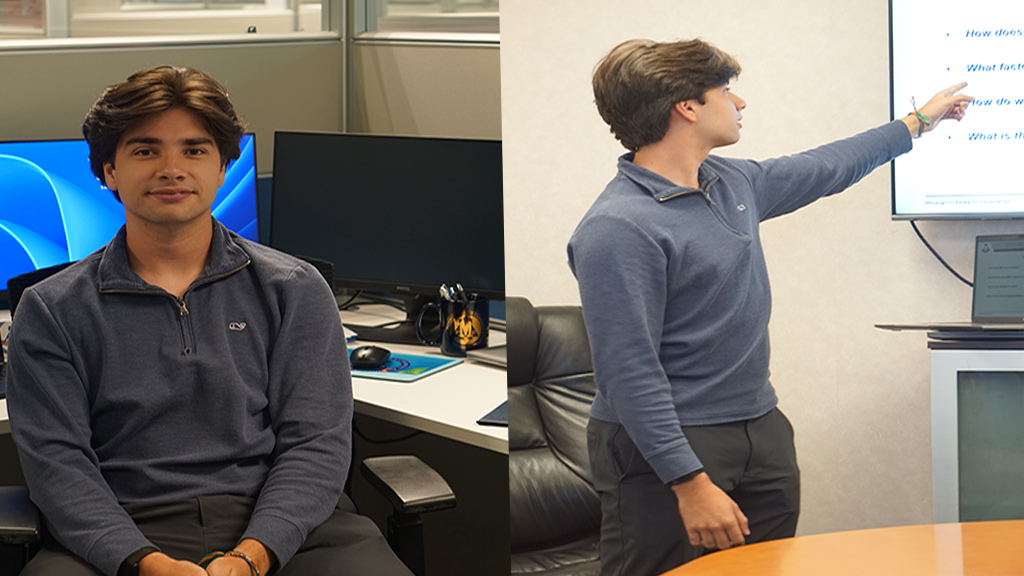
Daniel E. Castaneda Resulero '27, who's been interested in everything to do with computers ever since he was a kid, is majoring in Cybersecurity at Johnson & Wales University. JWU had the degree that fits his aspirations and provides real-world skills he can apply directly in the field. Now, he's pursuing a summer internship that's giving him practical experience he'll use to build his résumé and lanch his career.
“Cybersecurity is essentially learning how to protect digital systems, data and networks from people who are trying to break into them or cause harm. It's a mix of problem solving, critical thinking and technical skills, almost as if you're some sort of detective or a guard for information,” he explains. “You learn how attackers think so you can defend against them.”
Preparing for a Future in Cybersecurity Through Experience
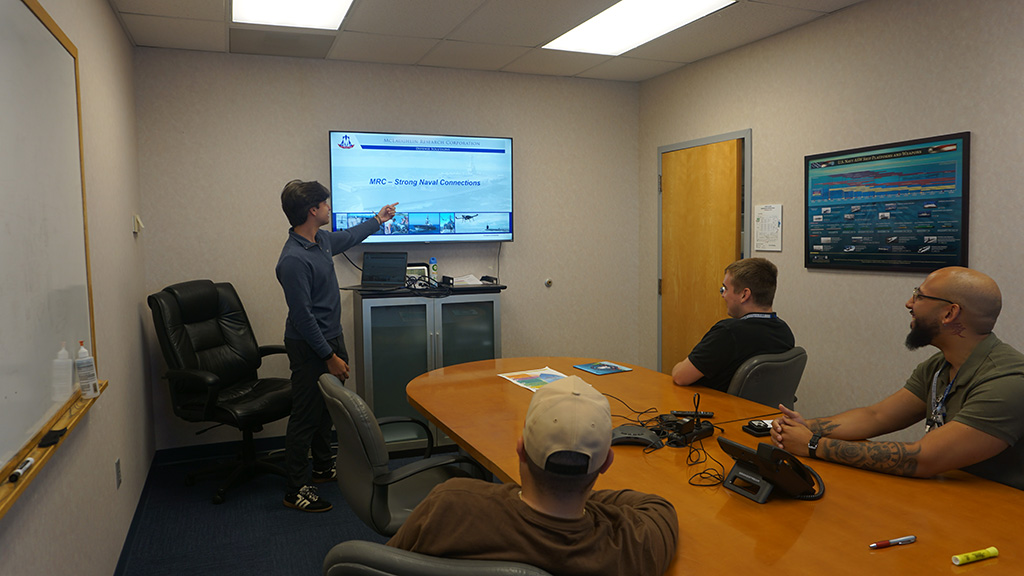
For Castaneda, gaining hands-on experience has been an important goal on his cybersecurity journey. Last summer, he secured an internship at McLaughlin Research Corporation, engineering solutions for defense agencies. He is now interning there this summer for the second time, serving as an entry-level information assurance compliance specialist. McLaughlin Research Corporation was founded in 1941 by Charles H. McLaughlin. It is an engineering and technical services firm which partners primarily with the U.S. Department of Defense. They provide support for the lifecycle of military, combat and sensor system programs.
His work includes a variety of responsibilities, ranging from IT support to cybersecurity compliance. “Some of the activities that I do as part of my internship are IT-Helpdesk, such as, helping my co-workers with computer problems. This ranges from helping them set up a monitor to fixing firewall settings within our domain.”
Another major part of his internship right now is working on Cybersecurity Maturity Model Certification (CMMC). “Think of it like passing an audit that shows we handle sensitive information responsibly and securely,” Castaneda details. “We are prepping to become level 2 compliant, which means we are working toward proving that our organization meets strict set of cybersecurity standards. It's a big undertaking for any organization, so being involved in that process has been a valuable experience.”
How He Secured a Cybersecurity Internship in the Defense Sector
Like many students seeking internships, Castaneda attended career fairs held by the school. There, he was able to connect with SENEDIA, a company that helps students secure internships within cybersecurity. Through that firm, Castaneda landed his internship with McLaughlin Corporation.
“I learned about SENEDIA through a career fair. I made sure to prepare ahead of time by doing research on them, practicing questions I might ask and bringing copies of my résumé.”
Castaneda emphasizes that preparation is key when making a first impression at career fairs.
“You don't want to walk up to someone at a career fair without really having any questions ready,” he cautions. “I would practice questions at home with a family member, as a first interview can also be really nerve-wracking."
He also notes that working with a company like McLaughlin Corporation provides strong exposure to cybersecurity and defense industry.
“Here in Middletown, R.I. they have a whole bunch of other cybersecurity companies,” Castaneda shares. “I have the option to branch out, and they will provide me with the opportunity to do so. Or if I want to stay here, I can continue working on what I'm doing.”
“They provide students with lots of flexibility and opportunities to get important experience that will prepare us for future careers, whether that's within the company or with another employer,” notes Castaneda.
What Does a Cybersecurity Internship Look Like Day to Day?
Castaneda walks through the steps of helping to ensure that the company keeps digital data safe, complies with regulations and meets security standards. The day typically begins at 7am, where he meets with his manager to review tasks for the day.
From there, his responsibilities can shift change between IT helpdesk issues and continuing the CMMC work.
He notes, “My favorite aspect of my role is that no day is really the same there is always something new that is happening. One moment I can fix a helpdesk issue, the other I am doing CMMC work.”
Through the helpdesk, he builds skills in diagnosing and fixing technical issues for people. From a compliance perspective, he is building skills in analyzing cybersecurity frameworks, which are sets of rules companies must follow, and how to identify gaps in the organization's security
“In terms of skills, I'm learning a lot about how a real organization approaches cybersecurity from the inside,” he explains. “On the help desk side, I'm getting better at solving problems quickly and communicating technical solutions. On the compliance side, I'm learning how to read and interpret cybersecurity frameworks, identifying any gaps in the organization's security. These are skills that carry directly into a career in this field.”
Castaneda emphasizes the importance of not only technical ability but communication, too.
“You have to be able to think critically and technically while also able to communicate clearly, and this internship is teaching me all about that.”
Applying Skills Learned at JWU to a Cybersecurity Internship
How Castaneda’s learning at JWU ties into his work at Mclaughlin Corporation: “In school I learn the frameworks and the reasoning behind why organizations need controls, and at the internship I get to apply them in real environment.”
Different classes taken throughout his time at JWU helped prepare him in many ways. "My courses covering networking helped give me a strong understanding of how systems communicate with each other,” he notes. “Now, whenever I am dealing with firewall setting or domains issues on the helpdesk side, I already have that strong foundation to understand what could be happening.”
“My favorite course so far has been Wireless Networking. The class was super hands-on! We worked through real scenarios that were applicable to the real-world workplace.”
He also notes that “the course especially prepared me for the networking side of my internship, which has become very valuable here.”
What's Next for Castaneda
After graduating from JWU, Castaneda plans to continue his education through JWU Online’s Master of Science in Cybersecurity & Artificial Intelligence program and continue working with McLaughlin Research Corporation.
“After I graduate with my undergraduate degree in cybersecurity, I plan to get my master’s through JWU,” he shares. “I plan to continue to work with McLaughlin Corporation to gain more experience."
Castaneda’s Advice for Students Seeking Cybersecurity Positions
Castaneda has immersed himself in his future field, between earning an associate degree in cybersecurity from a local community college, preparing for the final year of his bachelor’s degree in Cybersecurity at JWU and obtaining Cisco and CompTIA certifications in security and networking. He encourages other Wildcats to just get started talking to someone at a place they’d like to work.
“If I had one thing to say to other students, it would be: don't be scared. I feel like a lot of people are scared of going to things like the career fair, or they just don't want to go. But don't be afraid to step out of your comfort zone. That's where it really starts.”
He adds that cybersecurity is a field that requires professionals to stay up to date with everything.
“This field is always changing. Staying ahead requires continuous learning about the newer practices, certifications and the new threats that are discovered every day. If this kind of challenge excites you rather then scares you away, I think cybersecurity is a great path for you.”