News
Arts & Sciences
Health & Wellness
Health & Wellness
Research
Students
How JWU Graduate Students Are Solving Healthcare Problems
At Johnson & Wales University, capstone projects allow graduate students to address real-world problems or conduct advanced research — all while creating work strong enough to be published in journals and presented at conferences.
This spring, the Class of 2026 cohorts of JWU’s Master of Science in Physician Assistant Studies (MSPAS) and Occupational Therapy Doctorate (OTD) programs presented their research at Physician Assistant Scholarship Day and at Occupational Therapist (OT) Scholarship Day, sharing topics ranging from skincare to sex. Here's a cross-sample of their work.
Empowering Families to Advocate for Children
“In 2019, over three million U.S. children faced challenges due to a disability,” explained Venisa Rodriguez ’26 OTD. “There’s a need for caregivers to have education and resources to support their child’s care and management — but access varies.”
At Children’s Therapy Center (CTC) in Camarillo, California, which provides OT, physical therapy and psychology to families, Rodriguez provided eight weeks of one-hour educational sessions. She covered developmental milestones, motor development, sensory processing and integration, feeding, and sleep hygiene while helping families better understand pediatric OT terminology.
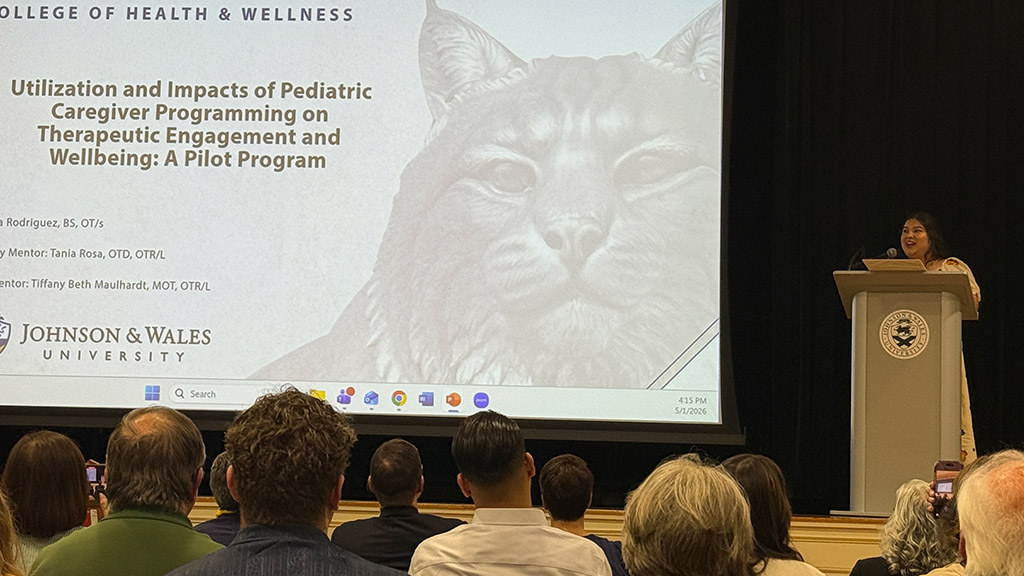
The results: understanding of terminology increased nearly 30%, while 78% of participants reported increased confidence in supporting their child.
“This was incredible to see,” Rodriguez, who has been hired by CTC, said. “Caregivers improved their ability to communicate with their child’s care team, improved their confidence and became better advocates for their children. And they feel they can carry over these strategies outside of the clinic.”
“Venisa’s care-centered program should be replicated as best practice across pediatrics,” noted Associate Professor Tania Rosa, OTD, OTR/L. “It truly impacted the lives of participants.”
Helping Neurodivergent Teens Grow Coping Skills
“Prevalence of neurodiverse conditions has increased over time,” explained Serena Mora ’26 OTD. “Challenges such as social emotional wellness can make neurodiverse teens less physically active than their peers.”
In the Extra Time program at KidSHINE, a pediatric occupational therapy clinic in Rowley, Massachusetts, Mora restructured a Bootcamp program to promote health management through physical activity, symptom management and social emotional health. There, she created space for teens to learn strategies without judgement.
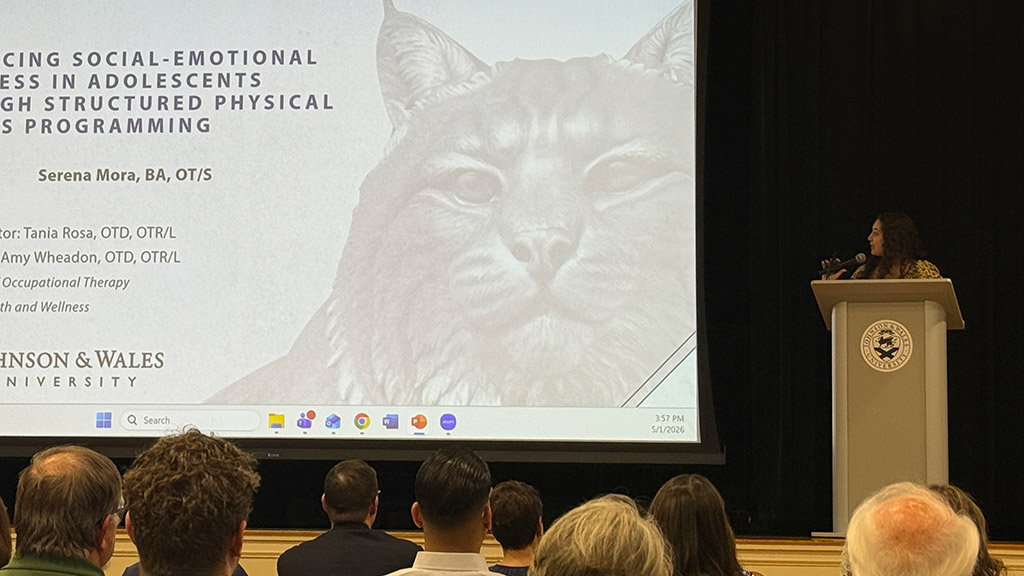
Meeting with eight boys aged 13-18 every Thursday evening, Mora introduced “friend challenges” as well as weekly themes such as self-awareness or managing emotions.
Her results: most participants practiced the strategies at home. “The teens became more aware of tasks and conditions involved, such as calming themselves down when upset or focusing more in the moment,” Mora noted.
“Teens are tough,” conceded Mora, who has been hired as an OT at KidSHINE. “It’s hard to get them to do what they don’t want to do. But you can never shut off your OT brain when it starts to take shape, and this took shape.”
Using Smartphones to Help People Manage Type 2 Diabetes
After working with patients who struggled to understand the medications they took, Eliza Nichols ’26 MSPAS focused her capstone on helping people manage diabetes and reduce A1C (a marker which measures blood sugar) by using something that 90% of people have: a cell phone.
“Providers can't impact systematic issues such as food insecurity and healthcare literacy that are causing the rise of type 2 diabetes,” she acknowledged. “What we can do is use an accessible resource to give patients more autonomy.”
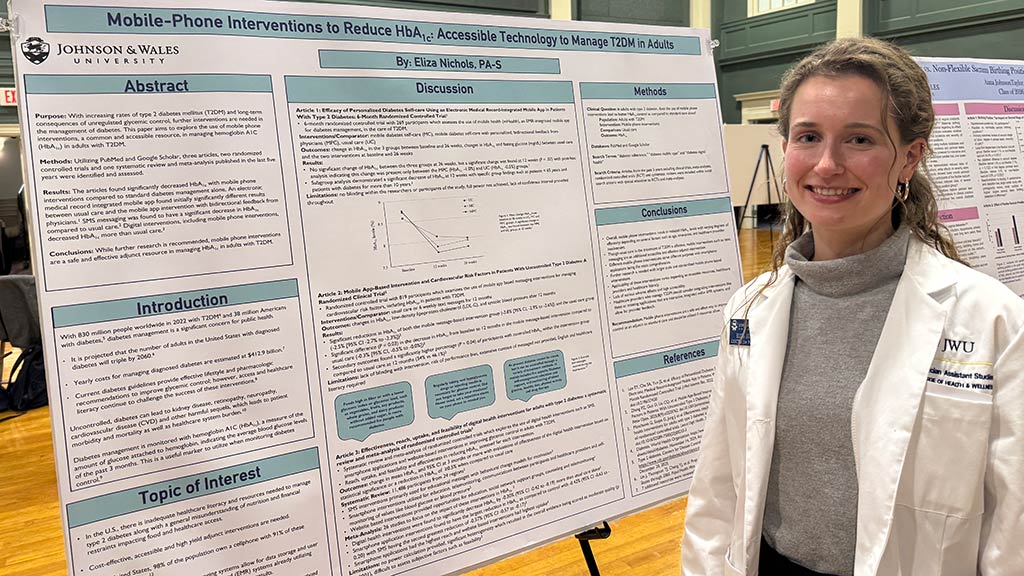
Her research on digital health interventions such as informational texts found a significant reduction in A1C compared to usual care. “I think it’s our responsibility to give patients every possible resource,” she noted. “Also, phones usually have translation options for Spanish-speaking populations, making communication in general more accessible.”
Nichols, who is interested in hands-on medicine and hopes to work in surgery, hopes to see an app that interacts with electronic health records so that patients can receive appropriate texts about diabetes management.
“I’d love if there was something that practitioners can create themselves!” she stated.
Better Interventions with Bereaved Children
Eleanor Gemma ’26 OTD was just 15 when she lost her father. “I think parental death is a taboo subject in society, like sex,” she said. “But bereavement still has acute effects. Grief can affect emotional regulation and memory processing. While 97% of teachers believe that bereavement impacts learning, they don’t know how to help, and there’s no funding.”
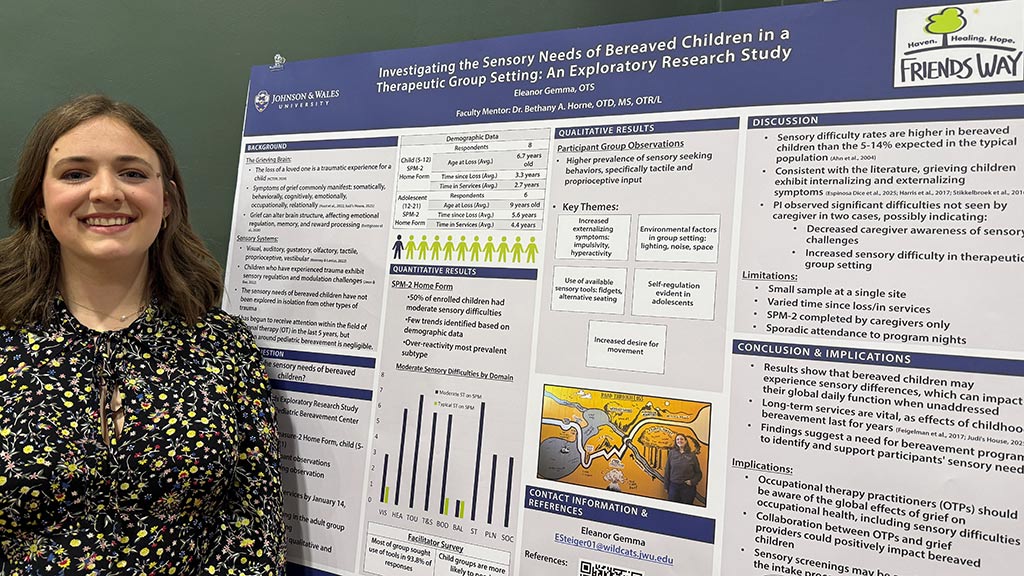
Years later, as a social worker whose new client had experienced sudden family loss, Gemma contacted Friends Way, Rhode Island’s only bereavement center serving children, teens and their families, to support the family. She reconnected with Friends Way for her JWU capstone, distributing a sensory process measure, leading group observations and surveying their volunteer facilitators.
Her findings: 50% of participants had at least moderate sensory difficulties, making them overreactive to touching and in need of more sensory tools and redirection. “In a typical population, that number would be 14%,” she explained.
Gemma will continue volunteering at Friends Way as a facilitator and OT, educating others to better serve kids. “If I as an occupational therapist can use my mental health training to address some of those knowledge gaps, that's a fabulous way to be involved with the population and help remediate some effects of bereavement,” she states.
Overcoming Treatment Fears with Virtual Reality Goggles
During her JWU fieldwork, Anna Beebe ’26 MSPAS encountered a six-year-old emergency room patient needing stitches.
“She had a common childhood phobia: needles,” Beebe recalled. “Due to her level of distress, child life specialists were consulted to educate her on what to anticipate. Showing them the tools they'll use and what she’ll expect to feel gave her more autonomy.”
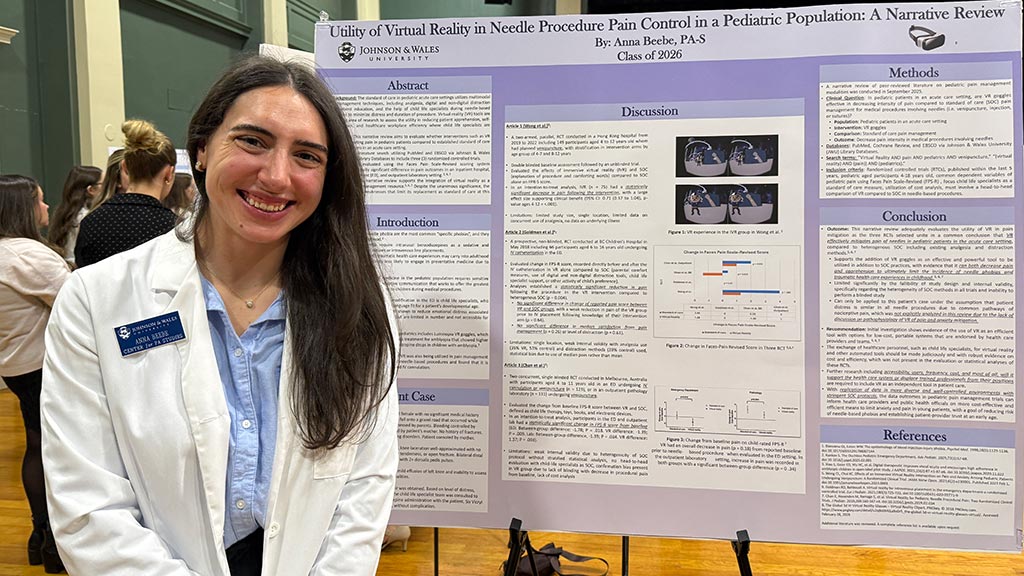
In her prior work as an ophthalmic technician, Beebe saw adult patients hesitate to seek eye care based on discomfort with prior medical treatments. One solution: Luminopia virtual reality (VR) goggles.
“I saw the goggles reduce anxiety over exams,” she reported. “For my capstone, I wondered if they could be used in acute care pediatric settings to decrease pain intensity and apprehension.”
Her research supported that building patient procedure information into VR experiences resulted in lower pain and anxiety. VR goggles were used in an episode of the medical drama “The Pitt,” and Beebe hopes they’ll become reality for kids.
“They could mitigate these painful experiences for children,” she said. “In turn, that could reduce adult apprehension over seeking primary care.”
Improving Gymnasts’ Performance Through Mental Skills Training
“I grew up as a gymnast, and I coach gymnastics now,” explained Acadia Cass ’26 OTD. “My capstone site, Olympia Gymnastics, had an issue with gymnasts having mental blocks, becoming scared to perform skills they were previously able to do.”
Continued Cass, “Mental skills training has proven helpful, but it's not something that's taught between coaches and athletes. My goal is to help coaches understand them and take basic skills to the athletes to help them be more successful.”
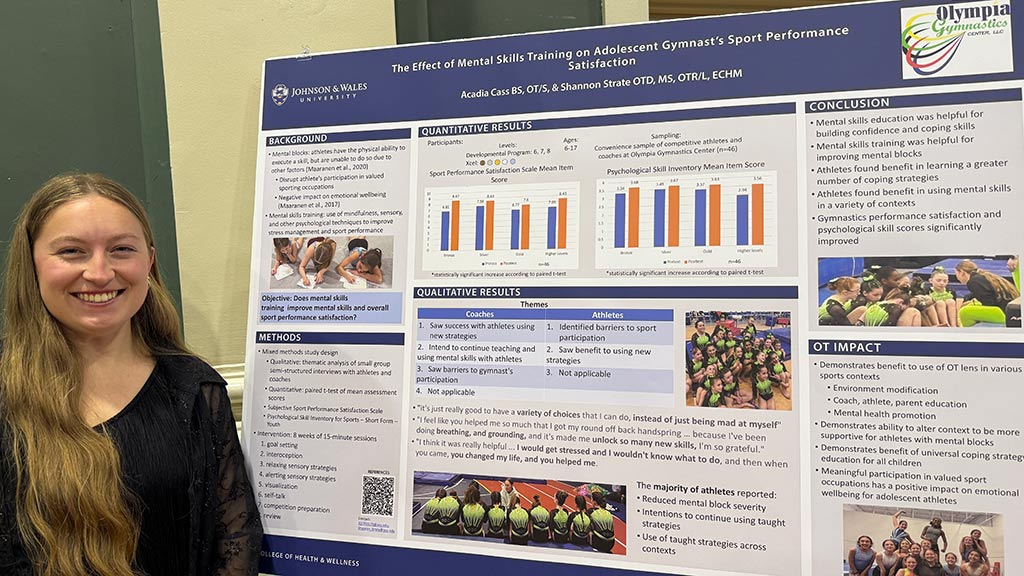
“To do this, I led small groups with 46 athletes, ages 6-17, for eight weeks,” she explained. “We taught different coping skills such as goal setting, relaxing, sensory strategies, managing anxiety and visualizing to mentally prepare for routines.”
The results: most athletes reported a reduction in mental block severity, while coaches, seeing athletes use the strategies they learned, want to continue using them.
“I am going to continue building at my gym,” Cass said of her immediate plans. “I'm also looking to finish writing a manuscript and hopefully publish my research.”
Rethinking Imaging in Pediatric Pneumonia
“While working in the Hasbro Children’s emergency room, I encountered a lot of kids being tested for pneumonia,” explained Gabriella Scarcella ’26 MSPAS. “Currently, the standard of care for pneumonia is an exam and then a chest X-ray. However, parents were concerned about radiation exposure. Chest X-rays also can't detect early or peripheral disease.”
An alternative: point-of-care lung ultrasound, where a machine brought to a patient’s bedside looks at their lungs with a probe. “I thought that was interesting, because not all providers do it,” she stated.
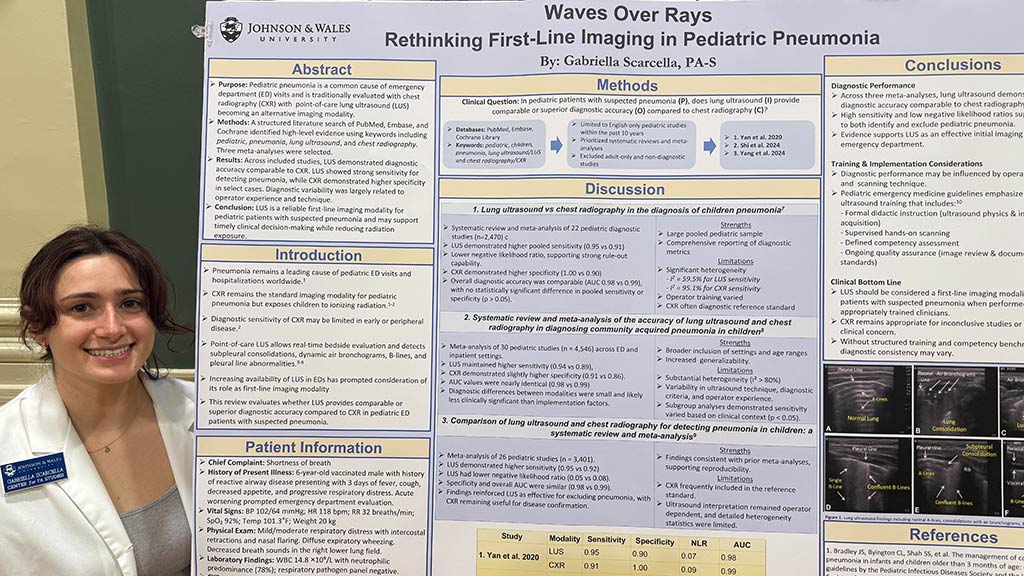
She compared the two methods and noted, “Point-of-care lung ultrasound could be a good first-line alternative when it's performed by someone who's appropriately trained, providing quicker time to diagnosis with less radiation. With more time to treat the disease, you can decrease patients’ length of stay while alleviating radiation concerns for parents. A chest X-ray could be used secondarily to confirm clinical suspicion.”
Scarcella learned during her fieldwork that she’d rather be providing direct care than waiting on consultations. “I'm seeking any pediatric surgery I can get my hands on,” said the go-getter.
Leveraging OT and Physical Therapy for Postpartum Women
“I was a big baby, almost 10 pounds,” shared Jayde Monteiro ’26 OTD. “Birthing me was hard on my mother, who had to recover from 20-something stitches while being a new mom.”
She wondered, how can occupational therapy (OT) and physical therapy (PT) help women navigate things like going the bathroom or having sex after a cesarean section or traumatic birth?
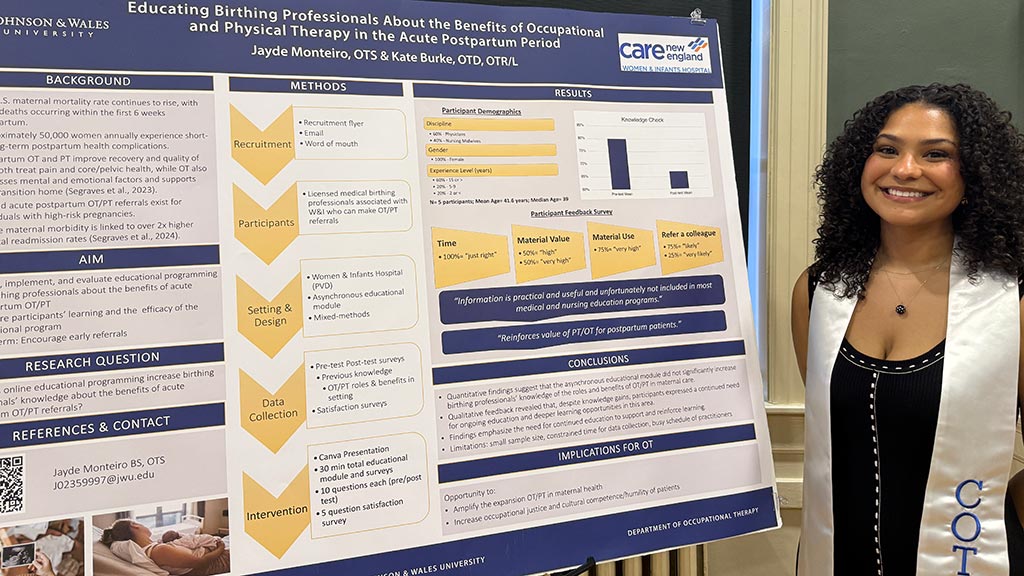
“I educated doctors, residents and nursing midwives at Women & Infants Hospital of Rhode Island about how we can improve acute postpartum patients’ short- and long-term health outcomes,” said Monteiro of her capstone.
Despite a small sample, her qualitative data was positive. “It showed that they think OT and PT are important for postpartum patients,” she noted. “One said, ‘This practical, useful information is unfortunately not included in most medical and nursing education programs, so I didn't know about it in order to refer these patients.’”
Monteiro’s next step: “I hope to work with kids, either in outpatient work or at a school. I’m also interested in working at Butler Hospital, where I’ve done some fieldwork.”
Providing Less Painful Solutions to Skin Growths
“I’ve always loved skin and its weird things that can grow and ooze and change!” exclaimed Alyssa Choquette ’26 MSPAS.
Choquette’s capstone explored removing seborrheic keratoses (waxy lesions that appear on aging skin, or what she calls “birthday barnacles”).
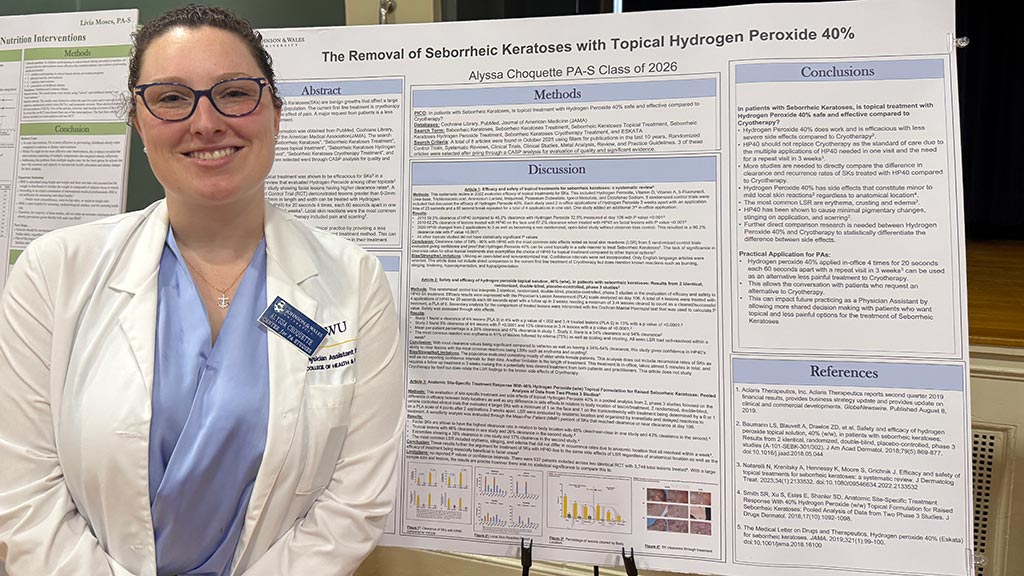
“Currently, dermatologists treat them with cryotherapy, or freezing the growths with liquid nitrogen,” she stated. “But it causes pain, blistering and even hypopigmentation (discoloration of skin), so patients request alternatives.”
An FDA-approved cream called Eskata, containing hydrogen peroxide 40%, was discontinued in 2019 due to poor sales, and Choquette explored its potential compared to cryotherapy.
Hydrogen peroxide 40% proved effective, with a nearly 90% clearance rate in all anatomical locations, as well as safe. The only drawback: “You need to come into the office, do 20 seconds, take a 60-second break, do another 20 seconds — four times in all,” she explained. “Then you repeat all that three weeks later. Some people find this too time-consuming and opt for liquid nitrogen.”
“All this allows the patient to have more of a choice in their treatment,” Choquette concluded. “I think that’s really important.”
Expanding Strategies for Older Adults Coping with Anxiety or Depression
“Sensory regulation for mental health — so prevalent in pediatrics — isn’t carried over to later adulthood,” acknowledged Jennifer Macnie ’26 OTD. “I wondered, how do occupation-based mindfulness strategies impact anxiety or depression in older adults in assisted living facilities?”
To find out, Macnie ran a program at Tockwotton on the Waterfront, helping assisted living participants practice strategies such as mindful listening and breathing techniques. She also created a sensory diet activity and surveys focusing on mindful listening, mindfulness for chronic pain, preferences for taste, smell and touch, and mindfulness for sleep.
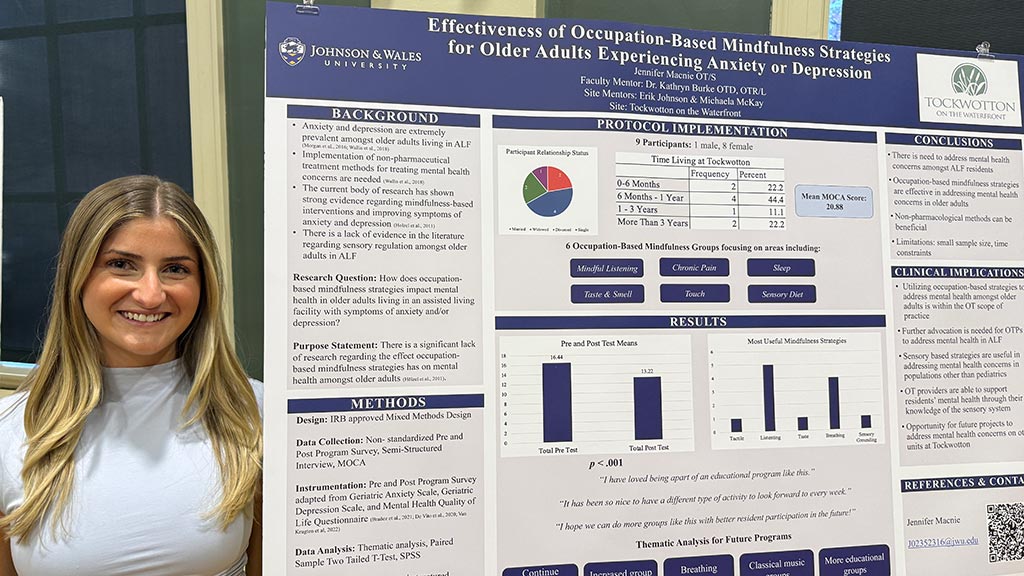
“Participants reported lower feelings of anxiety and depression in their post-tests,” she found. “They enjoyed the groups and called this very useful for addressing mental health.”
“My program is sustainable, so Tockwotton can continue running groups like this to address mental health,” Macnie shared. “They were on board from my first presentation.”
After passing her boards, she hopes to work with older adult populations in Boston.
Challenging the Role of Temperature Control After Cardiac Arrest
“In our ACLs training, we use an algorithm for returning spontaneous circulation in a patient — recheck the blood pressure, administer these meds, etc.,” reported Kirsten Rewerts ’26 MSPAS, who is currently interviewing for cardiothoracic surgery positions.
“One requirement was doing targeted temperature management on patients with cardiac arrest, cooling them for 24+ hours to increase mortality and neurological outcomes,” Rewerts noted. “Yet we learned that few people do this in practice. So I wondered, ‘If it’s in the American Heart Association guidelines but not everyone does it, is it necessary?’”
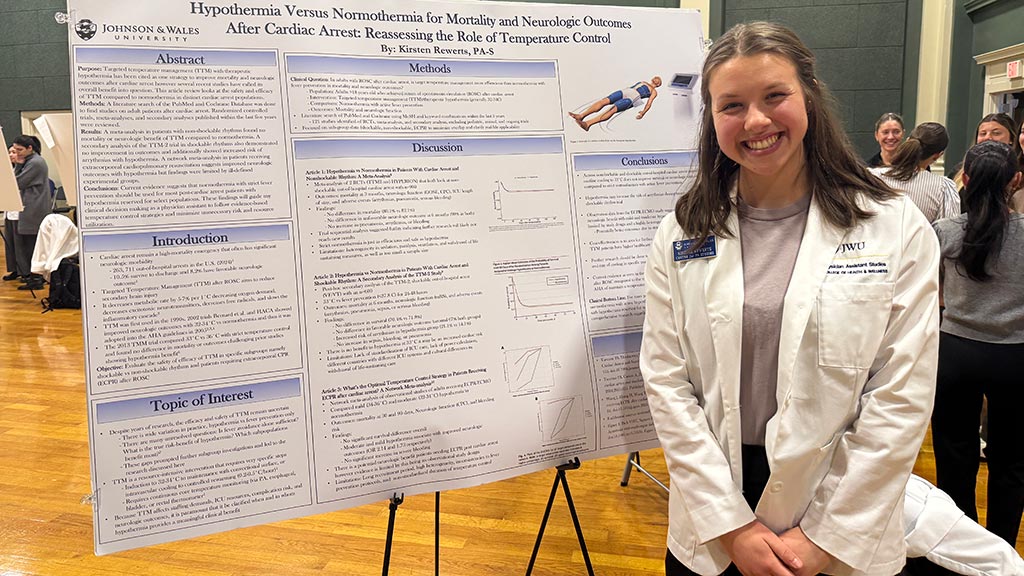
Those guidelines, explained Rewerts, date back to the early 2000s, and further research in the 2010s started challenging targeted temperature management.
For her capstone, she compared results from hypothermia (cooling the body below 95.0 degrees) versus normothermia (keeping patients’ core body temperature at normal range).
“There isn’t indisputable evidence that hypothermia improves patient survival or neurological outcome rates, despite the guidelines still promoting it,” she concluded. “In all other patients, with all other rhythms, as long as fever is prevented, normothermia works just as well.”
Exploring the Benefits of Aquatic Therapy
“I wanted to look at OT’s impact on aquatic therapy and how we can improve referral rates,” shared Matile Kaplan ’26 OTD, who grew up surfing and swimming and whose mother benefitted from aqua yoga sessions. “That way, more patients can engage in aquatic therapy, requiring less money from insurance and a quicker recovery time.”
Her research results: “All the studies showed improvements in flexibility, range of motion and quality of life. The benefits of aquatic therapy were not only physical but also mental, psychological, cardiovascular, gastrointestinal — they affected the entire body. Despite all this, it’s still not prevalent.”
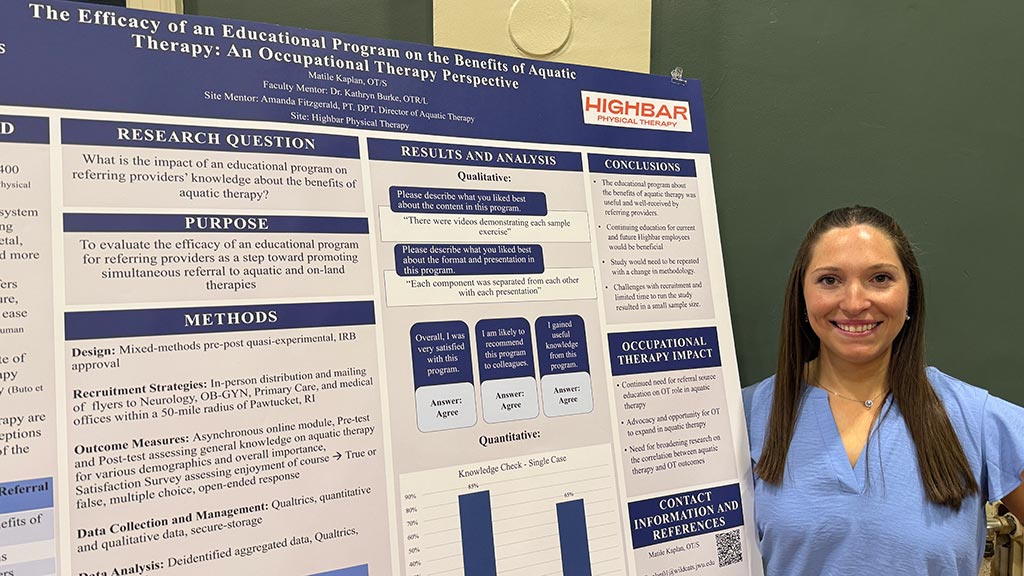
To address the need for knowledge, Kaplan created educational programming through an online module with videos demonstrating each sample exercise and reached out to doctors at 47 clinics within a 50-mile radius of Pawtucket, Rhode Island. Although her participant sample size was small, the doctors were satisfied with Kaplan’s program and found it helpful.
“My hope is to see more continuing education and more opportunities for OTs to expand their advocacy in aquatic therapy,” she concluded.
Related Posts

Hospitality & Business
Experiential Education
Students